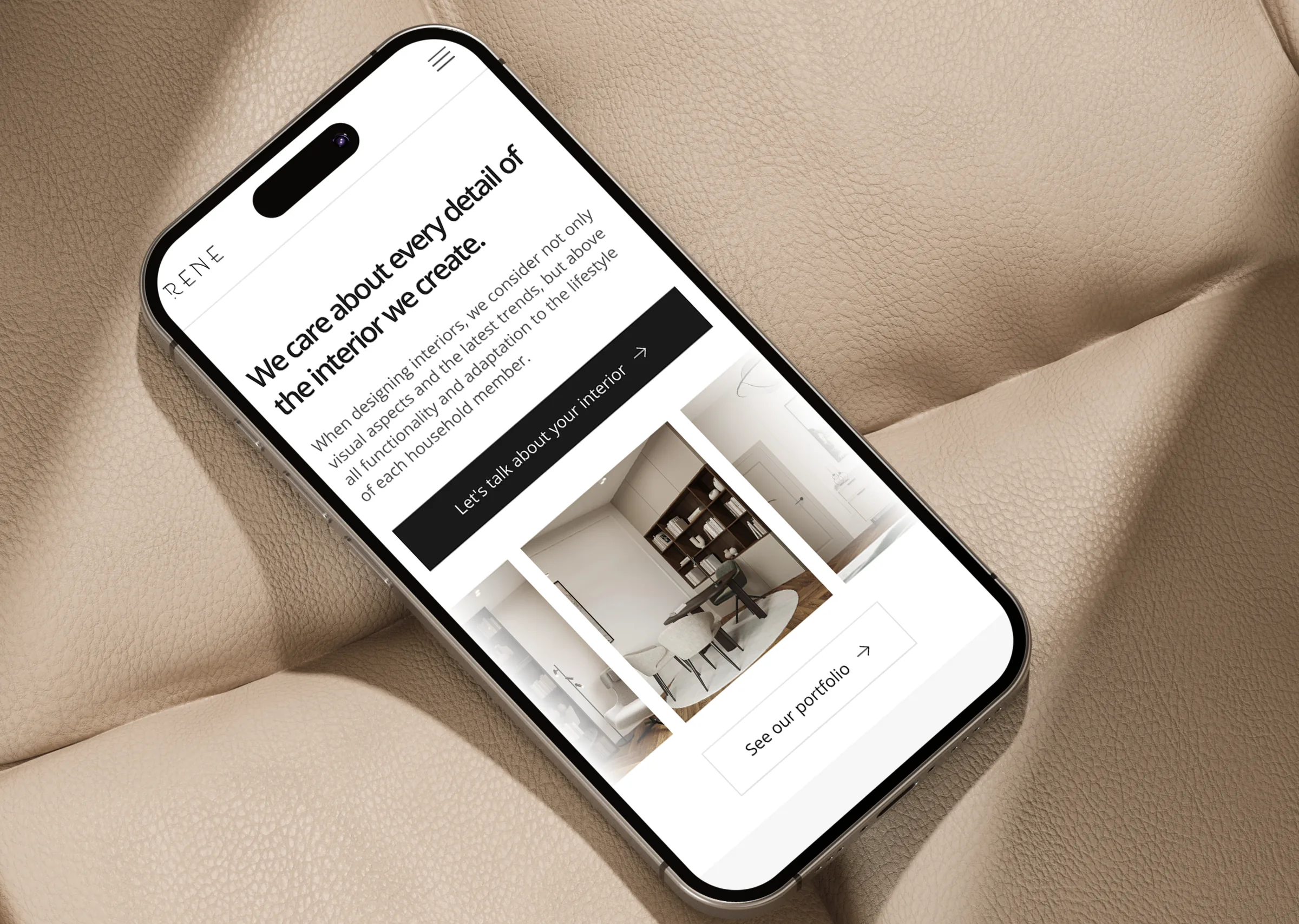
ReneDesign. A website for an interior design company
A Warsaw studio designs interiors from first concept to on-site supervision, and its old site couldn't say where a single client came from. Before the ads started, it needed a site that brings in enquiries and measures them.
Client
- ReneDesign
Industry
- Interior design
My role
- UX/UI Designer & front-end developer
Scope
- 18 pages
Tools
- Figma · HTML/CSS/JS · GTM · GA4 · Meta Pixel
Services
- UX/UI design, Web development, Analytics & tracking
Live site
- renedesign.pl
Pages hand-coded
- 18
- no WordPress, no plugin stack, no page builder
Project pages
- 12
- each one labelled with its floor area
Process steps
- 8
- first conversation through to a finished interior
The premise
Design and hand-built development of 18 pages for a Warsaw interior design studio, with analytics in place before its ads started.
[01]
Overview
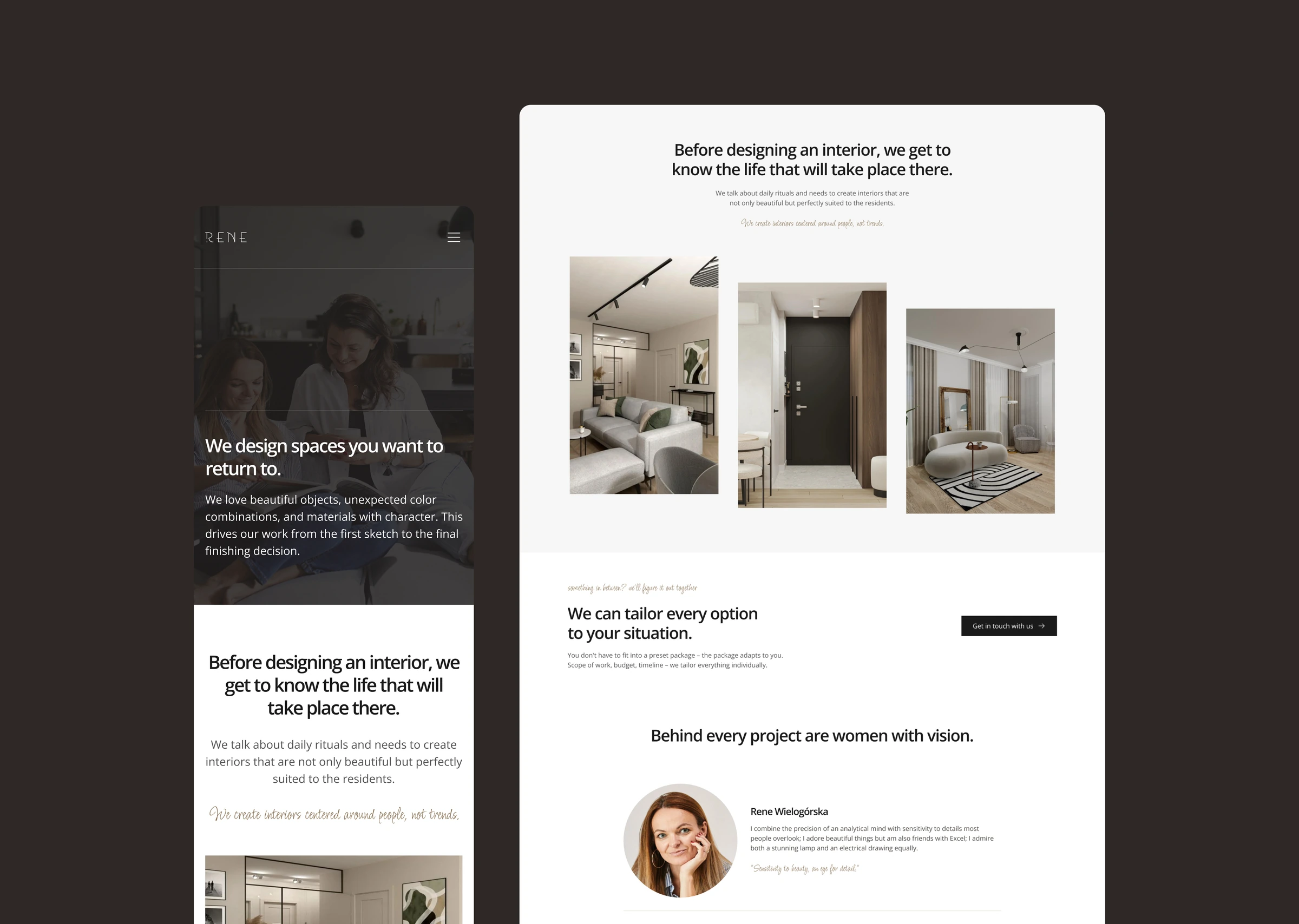
ReneDesign is a Warsaw studio that designs interiors from first concept through to on-site supervision.
My job was the studio's new website: the UX/UI design and a hand-coded build of 18 pages in place of the old WordPress site, together with the analytics.
[02]
The challenge
The old WordPress site was slow and parts of it didn't load. There was a form, but nobody was measuring how many people submitted it. With no analytics at all, the studio couldn't tell a referral from a Google visitor from a Facebook click, and Meta Ads were about to start.
So the site had to
- bring in enquiries through the form, which the studio calls back the next working day
- work as a sales channel for paid traffic, not just a portfolio to look at
- show where every enquiry comes from before the first ad goes out
- run without plugins that keep breaking
[03]
One path to the form
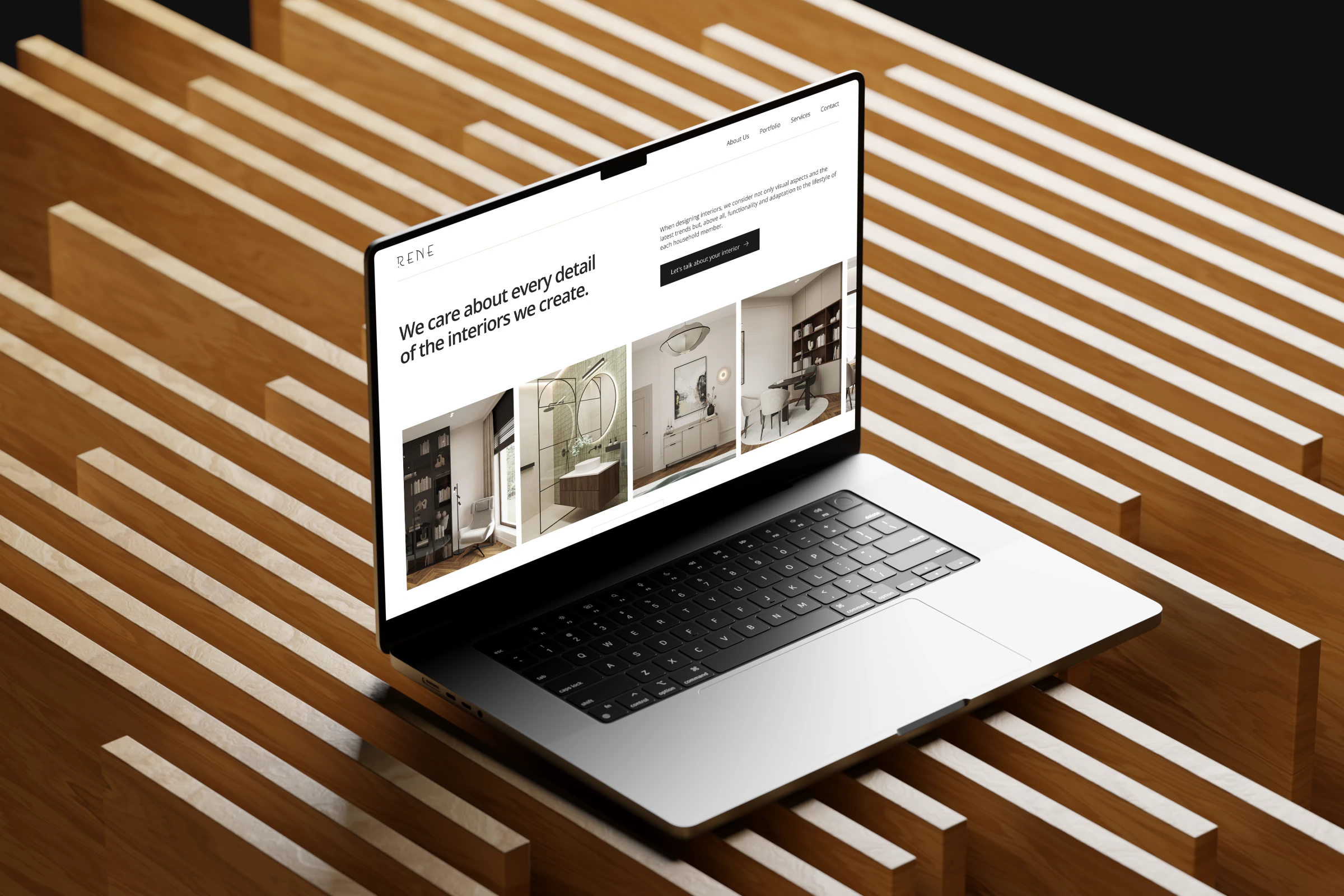
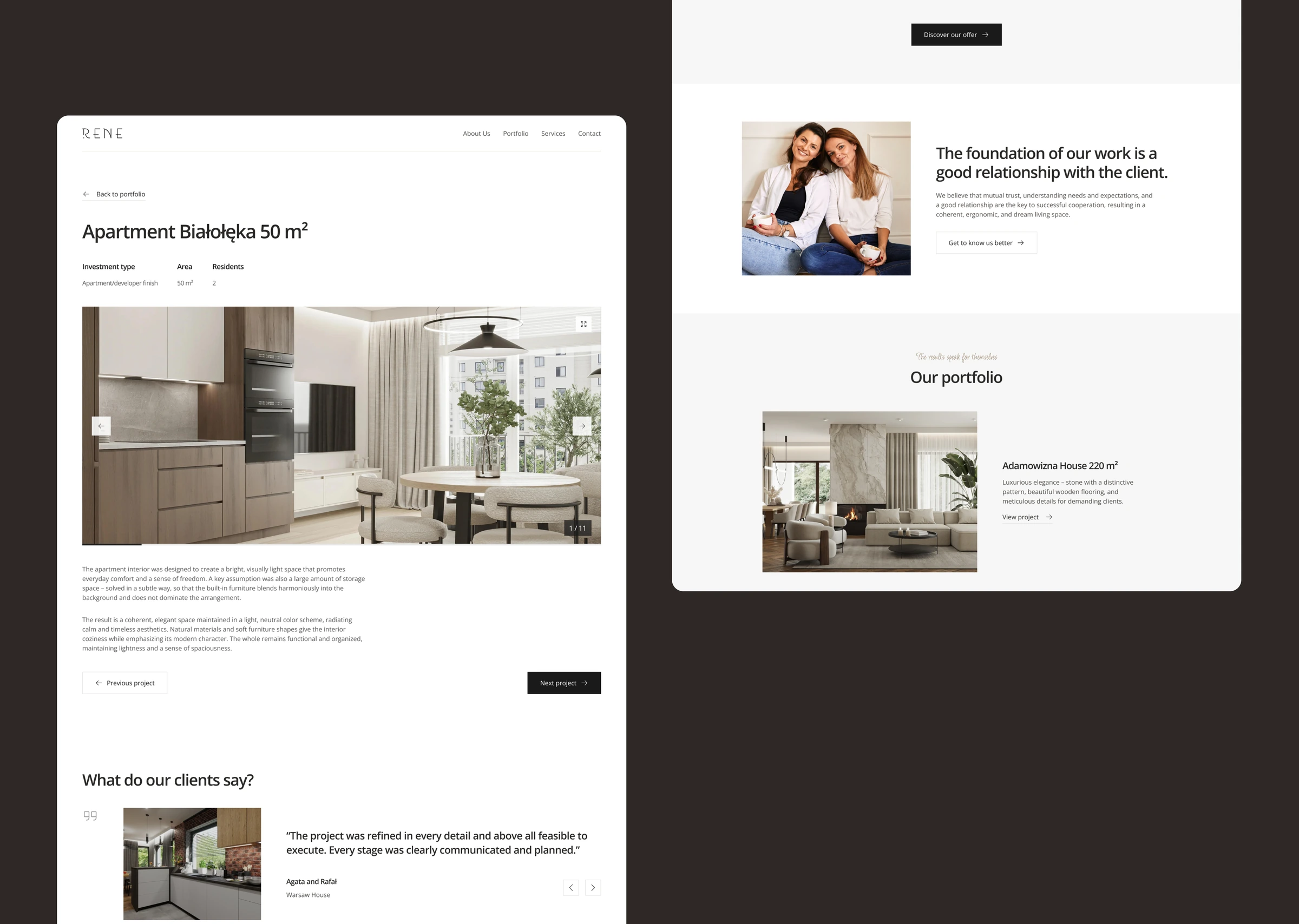
The homepage runs a single path: a project photo, the offer, client reviews, then the form.
The form
- has just three fields: name, phone and a short description of the project
- is always within reach
- waits at the end of every project page as well
[04]
Projects, offer and process
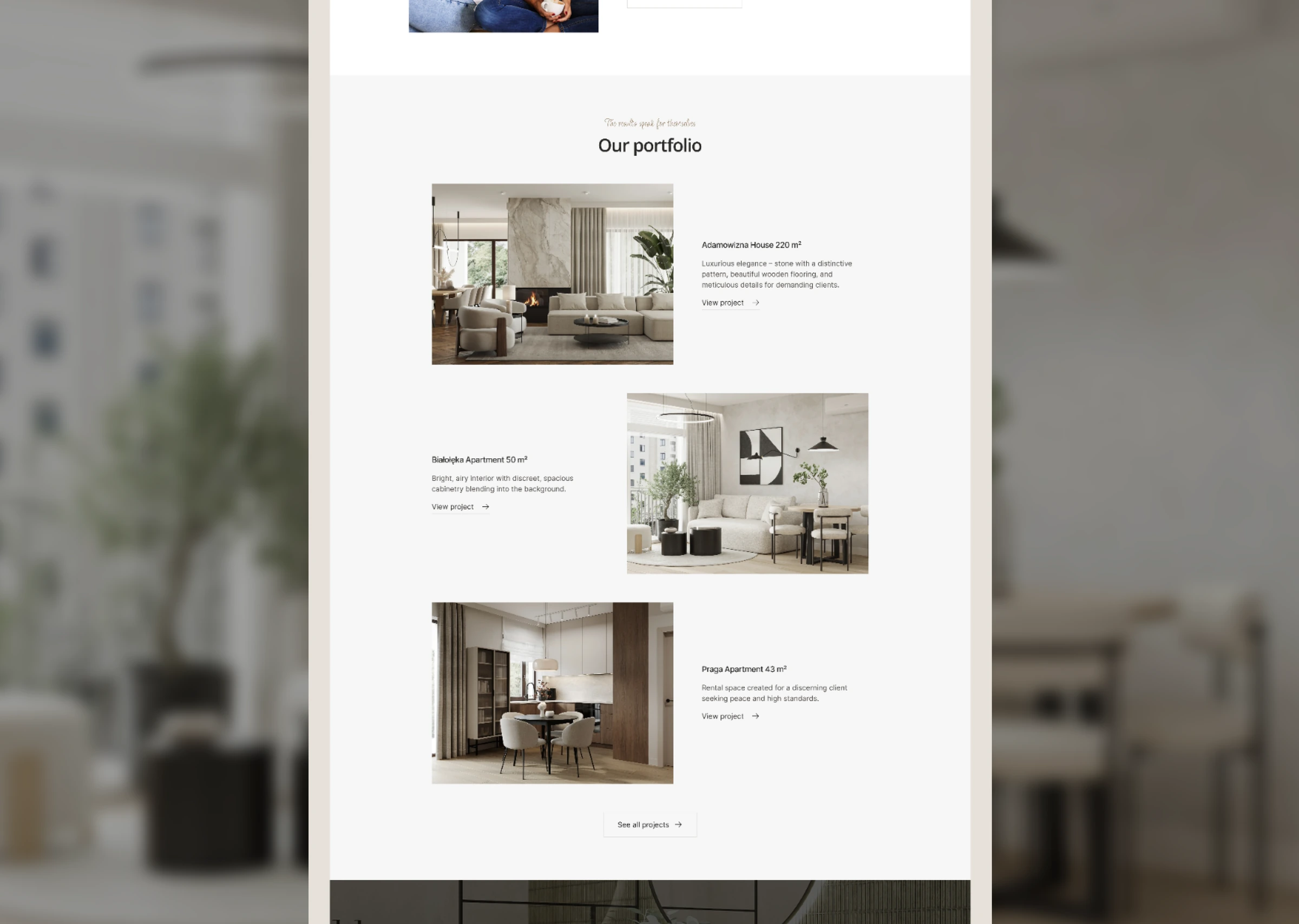
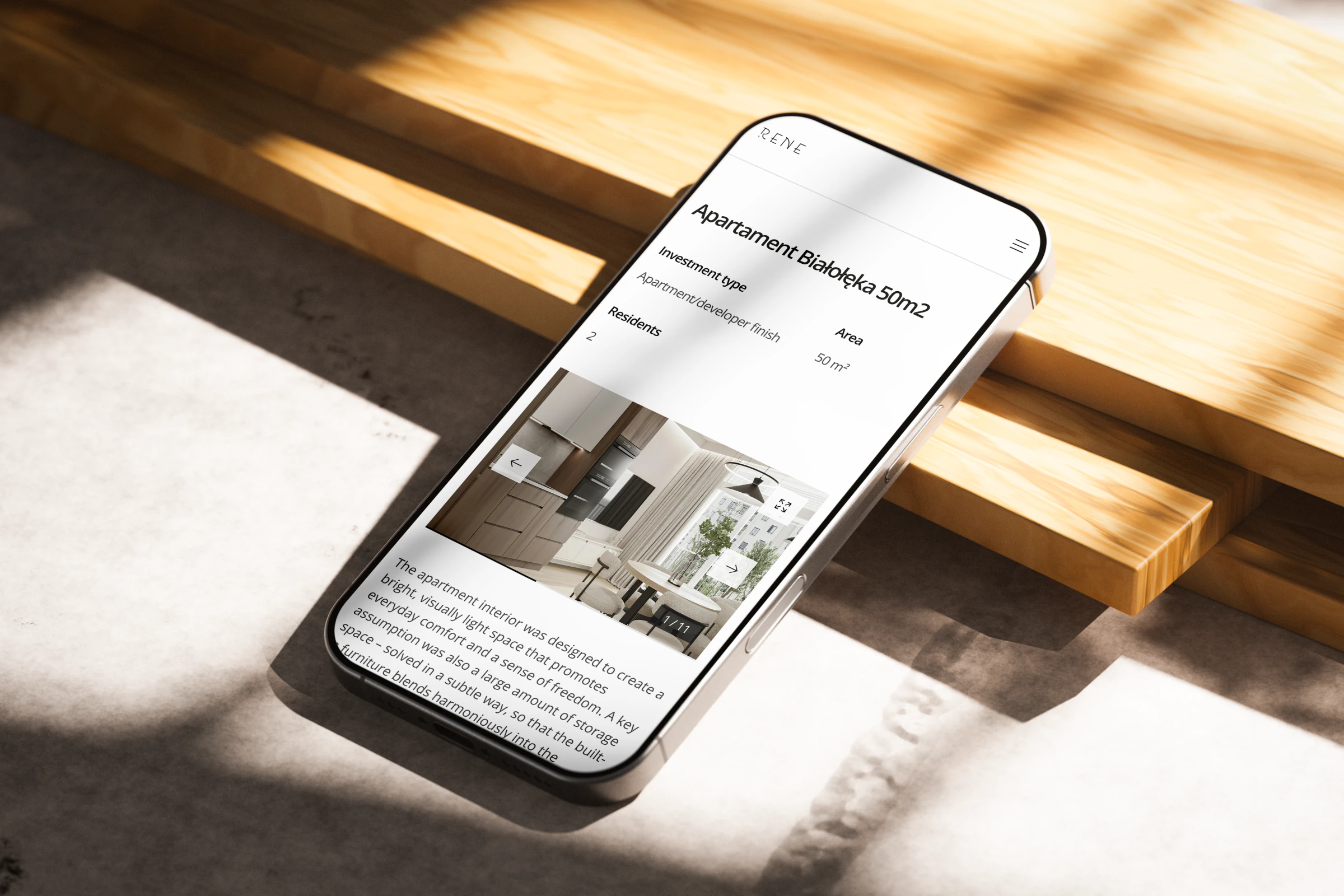
The projects, the offer and the process each got pages of their own.
I prepared
- 12 project pages, each with its floor area and a gallery
- the offer as three packages, with design-with-supervision, the service the studio earns most from, given the most weight
- the process laid out in 8 steps, from the first call to a finished interior
- a carousel of 17 client reviews on the homepage, the offer page and contact
[05]
Measurement before the visual layer
The analytics went in before the visual layer, so the site could be measured from its first day.
I set up
- GTM, GA4 and the Meta Pixel
- a GDPR consent banner with a real choice, denied by default
- one named event with a unique ID for every submitted form, so the same lead is never counted twice
- the SEO basics: local H1s, meta, alt text, LocalBusiness schema, a sitemap and Search Console
[06]
The result
The studio has a new site of 18 pages, and for the first time it can see where each enquiry came from.
The site
- leads from every project page to the form
- gives the most room to the service the studio earns most from
- counts every enquiry once and knows its source
- runs without WordPress and without plugins
My part was the UX/UI design, the hand-coded build and the analytics.
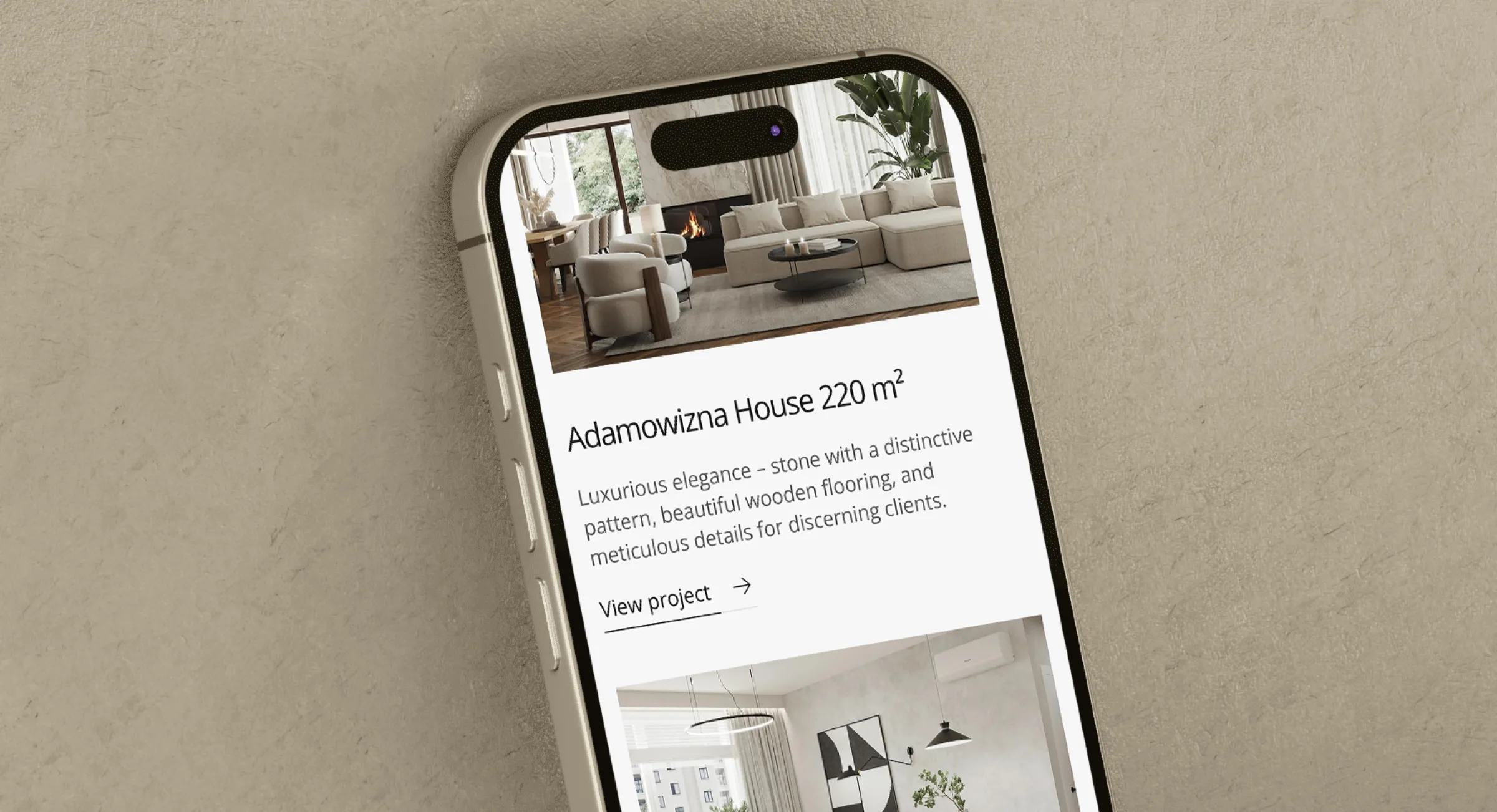
Screens
In the client's words

“Our old site was slow, dated and kept breaking. Igor rebuilt it from scratch, now it loads instantly, looks modern and actually works for our business.”
 Rene WielogórskaFounder, ReneDesign
Next step