All projects

Premium furniture E-commerce

Wooden garden chairs for +$1000 require trust, emotion, and storytelling — not just pretty product photos. This project is an attempt to combine premium e-commerce with the warmth of craftsmanship.

Services

Web design, UX Research, Information Architecture

Date

2025

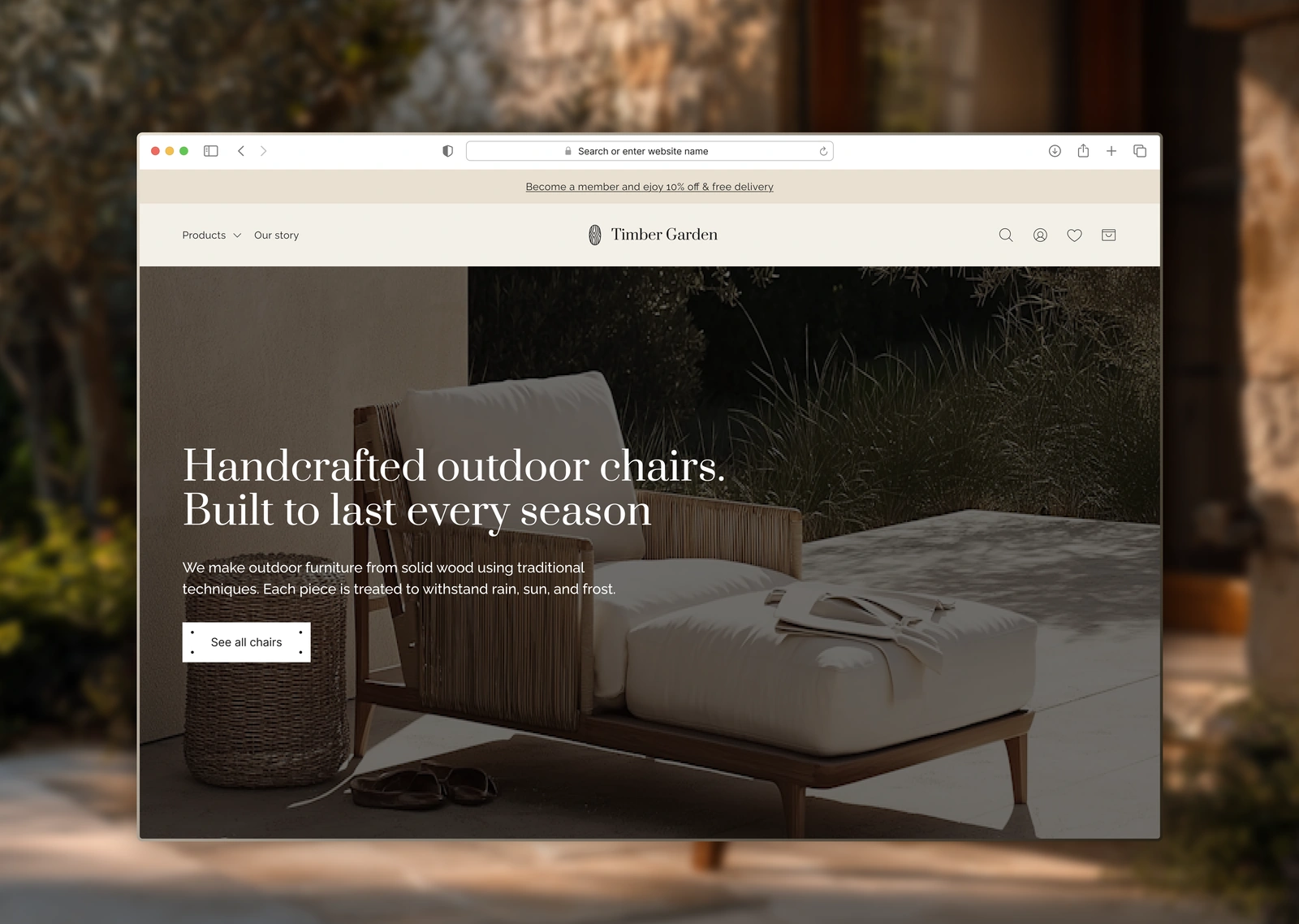
The Timber Garden storefront: handcrafted teak chairs photographed in the gardens they are made for.

Nobody spends €600 on a chair they can't picture in their garden.

Premium garden furniture isn't an impulse buy. Customers spending €400–800 on a single chair need trust, imagination, and justification — not just pretty product shots. This project explores how to merge premium e-commerce with the warmth of craftsmanship.

Three questions stand between a visitor and a €600 chair. Every design decision in this project answers one of them.

“Who makes this?” → Trust

An unfamiliar brand asking for €600 has to prove there are people behind the product — a workshop, a warranty, a name.

“How will it look in my garden?” → Imagination

Nobody buys furniture from a cut-out on white. The customer has to see the chair in a space they recognise as their own.

“Why should I pay 10× more than IKEA?” → Justification

The price gap is the whole objection. Materials, craft, and lifespan have to be argued, not assumed.

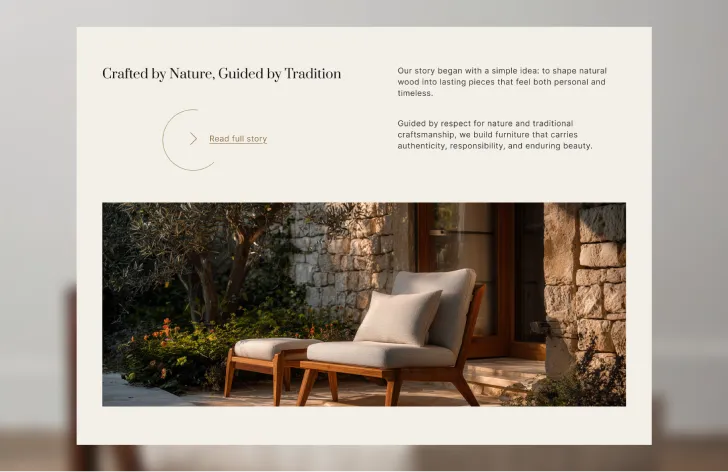
The brand story block: “Crafted by Nature, Guided by Tradition”, with a chair shot in a real garden rather than cut out on white.

Research & strategy

I identified three target segments with different motivations.

  • Premium (35–55) — quality over quantity. Buys once, expects it to last a decade.

  • Design enthusiasts (25–45) — unique pieces for Instagram-worthy spaces.

  • Eco-advocates (30–50) — local, sustainable, ethically sourced wood.

Information architecture

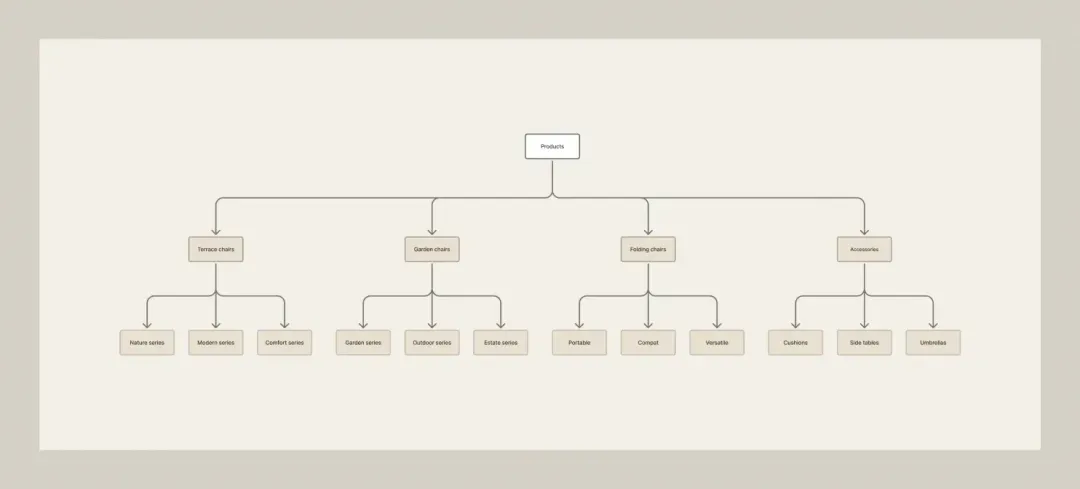
126 products needed a system, not just a grid. I organised products into series, based on lifestyle.

The category flowchart: Products branching into Terrace chairs, Garden chairs, Folding chairs and Accessories, each with its own series.

Why series? Users first identify with a LIFESTYLE (“I want something modern for my city balcony”), then choose a specific product. This reduces decision fatigue and increases AOV (average order value).

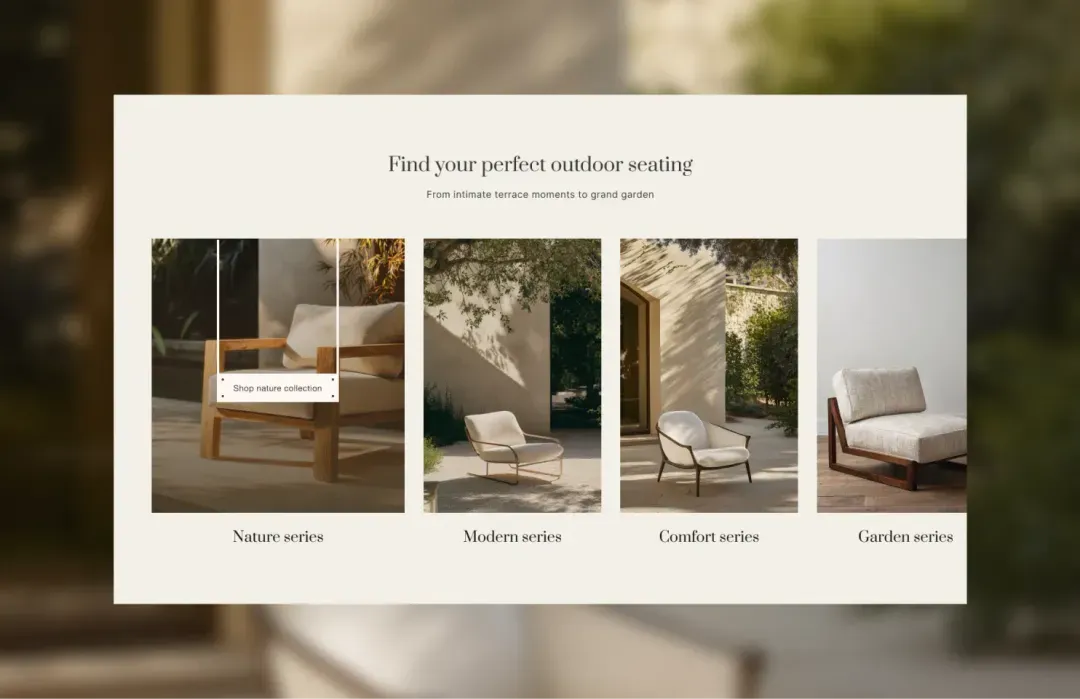
“Find your perfect outdoor seating”: the four series — Nature, Modern, Comfort, Garden — set side by side on the homepage.

Homepage design

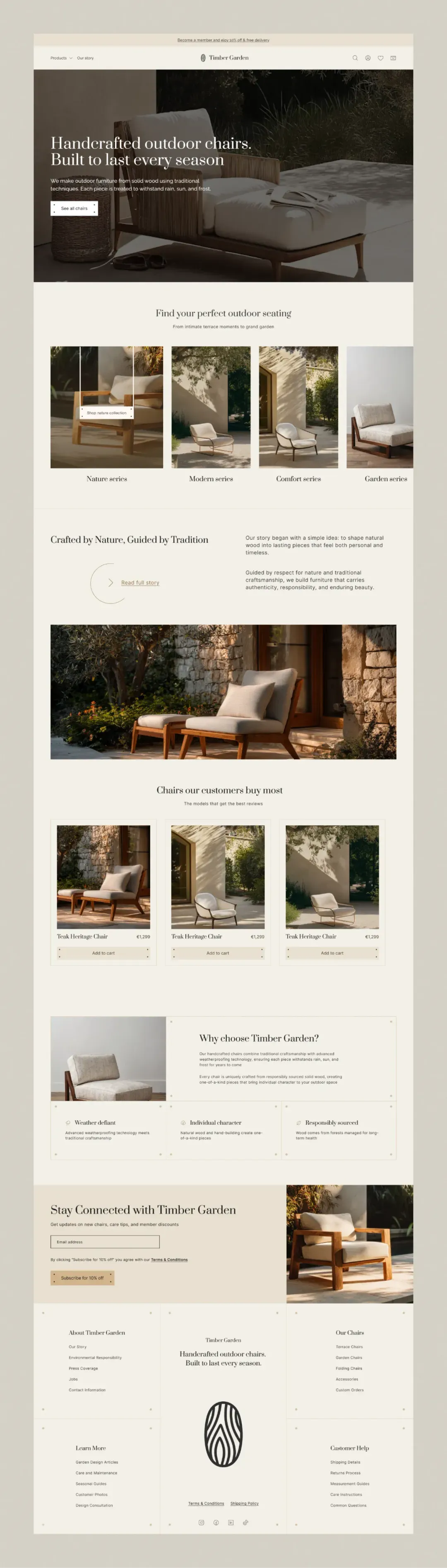
The homepage end to end: hero, the four series, the brand story, best-sellers, the “Why choose Timber Garden” band and the newsletter signup.

Category page

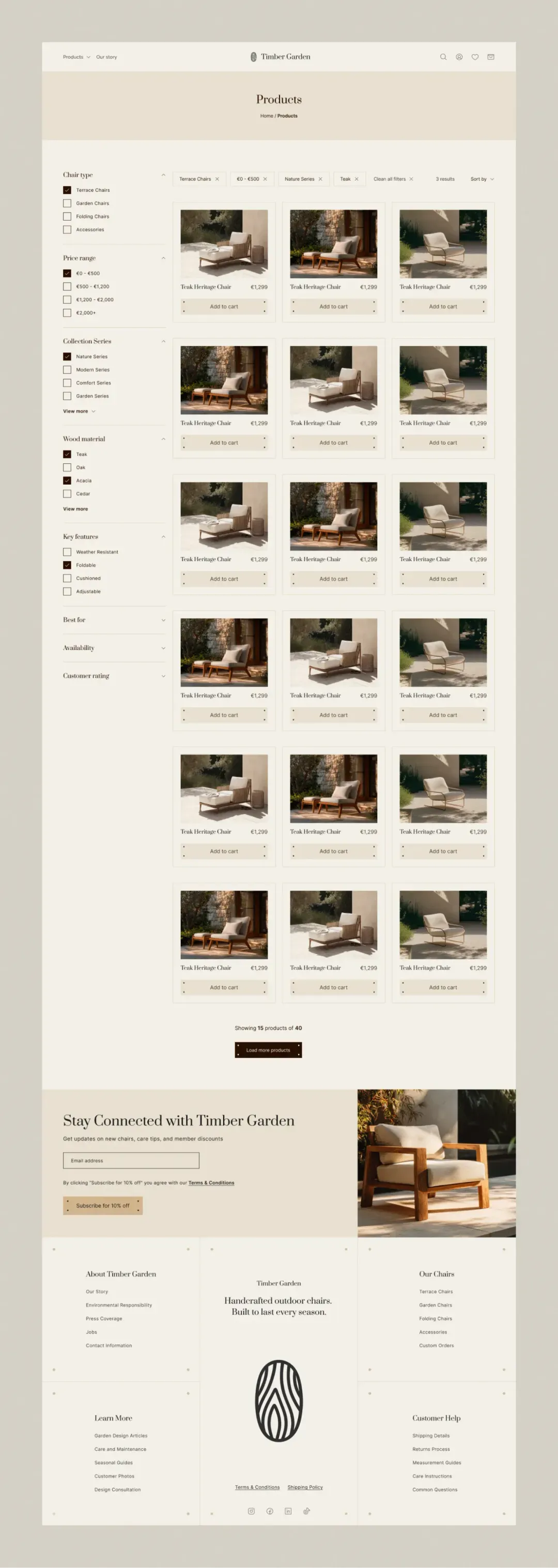
The products page: the filter rail — chair type, price, series, wood, key features — beside the listing grid and its active-filter chips.

Product page

This is where the sale happens — or doesn't. I designed the product page around two principles.

01

Story before specs

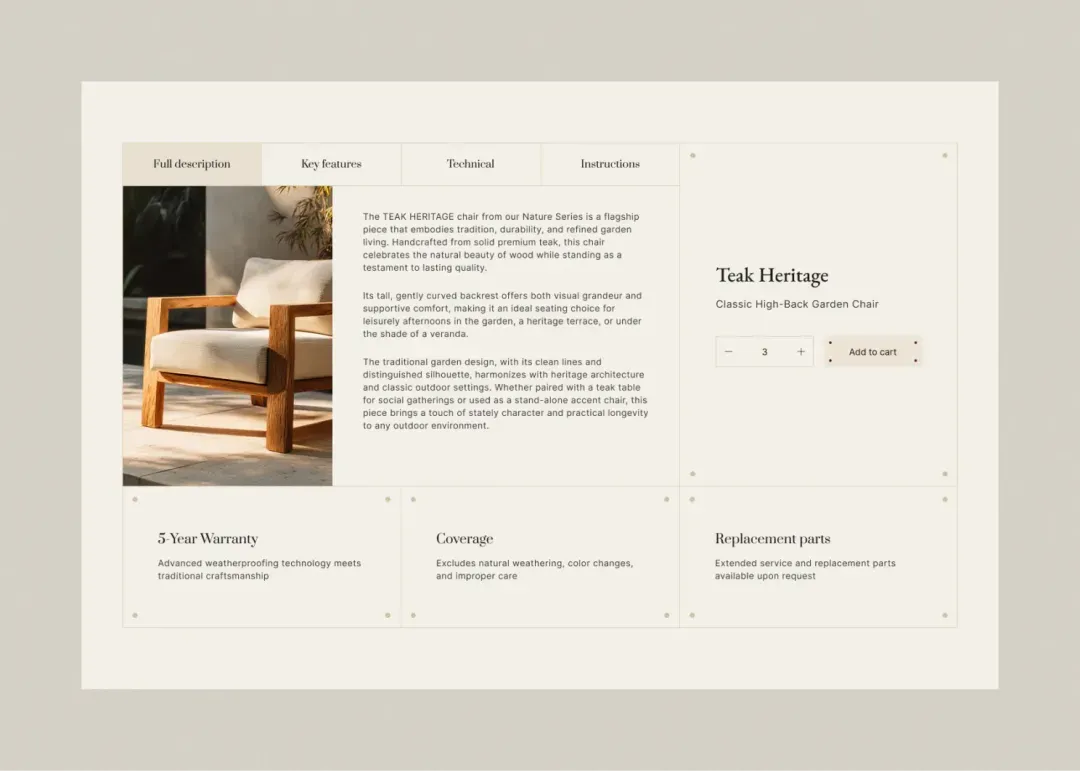
Traditional e-commerce leads with dimensions and materials. I flipped it — the “Full description” tab opens with narrative. Premium customers buy the IDEA first, specs second.

The description tabs: “Full description” opens on narrative copy, with Key features, Technical and Instructions behind it — and the warranty row underneath.
02

Trust signals below the fold

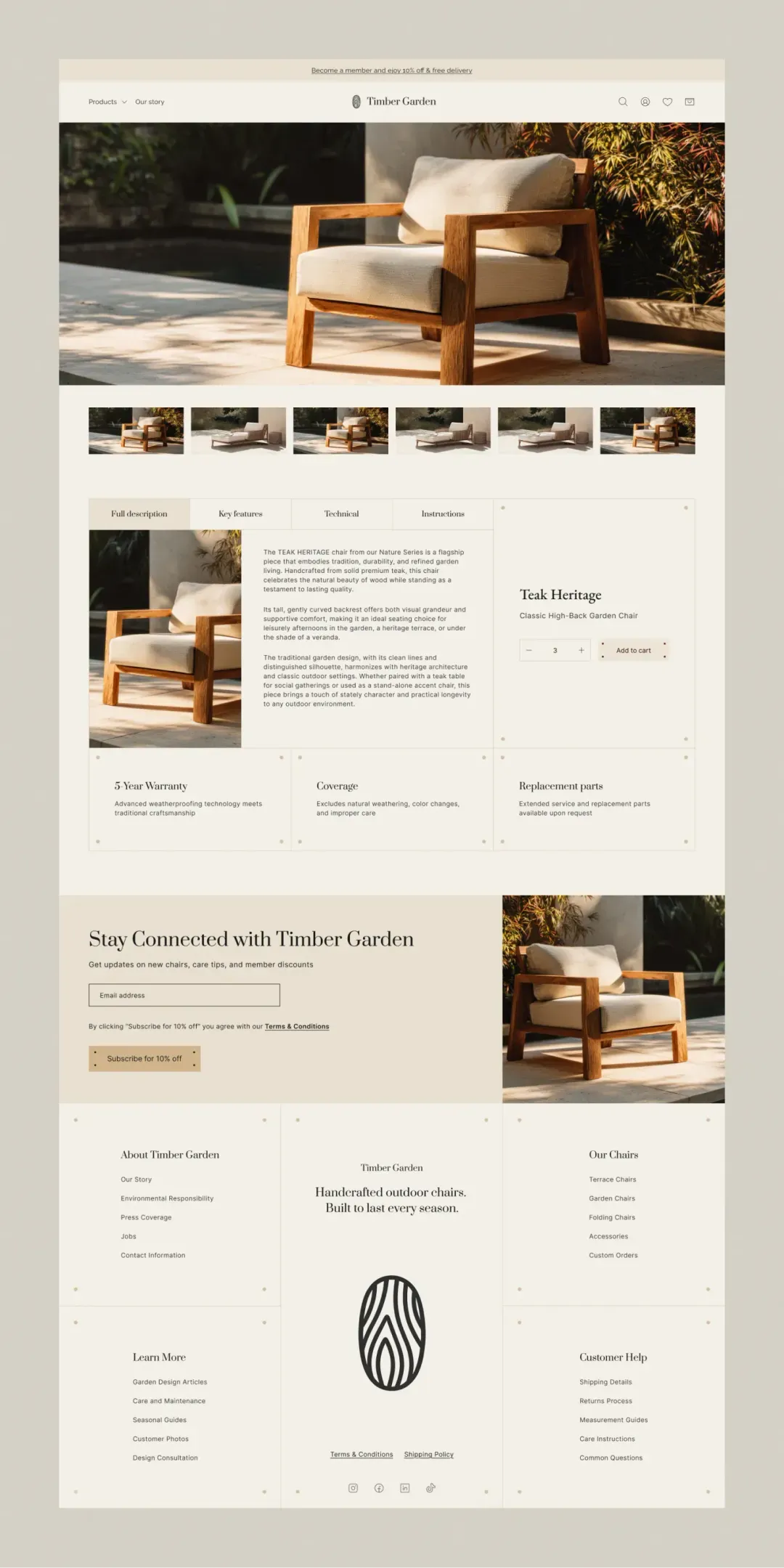
Warranty, coverage, and replacement parts sit directly under the buy area. At €600+, customers need reassurance that this isn't a disposable purchase.

The full product page: gallery, buy area, then the 5-year warranty, coverage and replacement-parts trio directly beneath it.

Visual design decisions

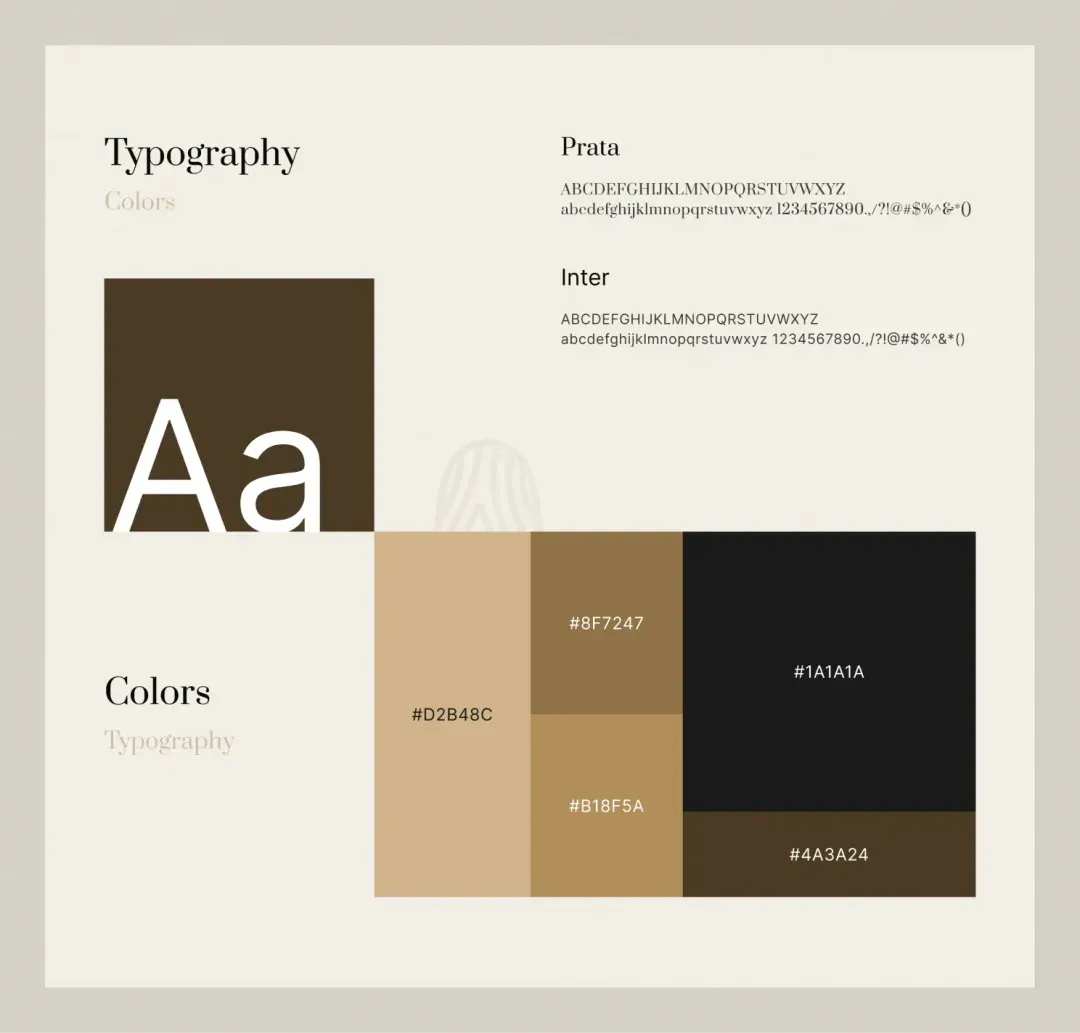
Warm whites, creamy backgrounds, wood tones. The UI feels like natural materials. Photography is lifestyle context, natural lighting, outdoor settings — never sterile studio shots.

The style guide: Prata and Inter set against the palette — #D2B48C, #8F7247, #B18F5A, #1A1A1A, #4A3A24.

What I've learned

Premium e-commerce is content marketing

Without storytelling, it's just an expensive store with pretty pictures.

Information architecture matters more than UI polish

126 products need a SYSTEM. Getting the structure right is 80% of the work.

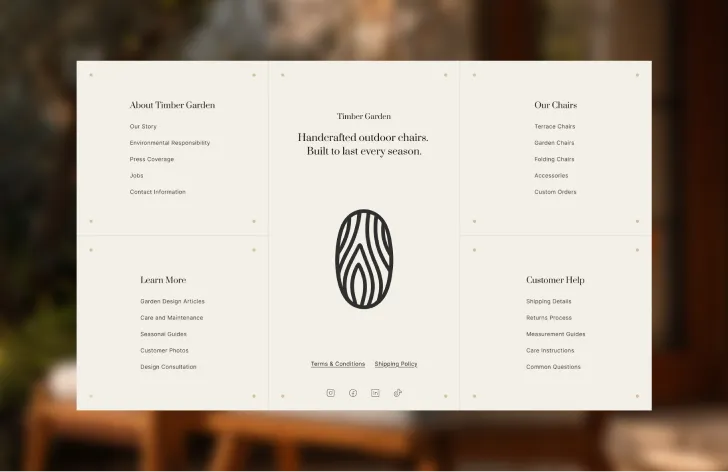
The footer: About, Our Chairs, Learn More and Customer Help around the brand mark and tagline.

Thank you for reading

Questions about the process? Want to discuss the project?
TimberGarden is a conceptual project. Brand, products, and pricing are fictional.

More projects